Archers Online: PvP
- 4.4
- Rating
- 10.00M
- Installs
- Free
- Price

 Analysis by App-foxy
Archers Online: PvP caught my attention because it turns a very familiar idea—aiming a bow at another player—into a compact action game built around direct duels. After spending time with it, I found that its appeal is less about a large world or a long campaign and more about the mood of each shot: line up the angle, judge the moment, release, and deal with the result. It is a focused experience for people who enjoy short competitive sessions and the small satisfaction of improving through repetition.
The game is free to download, belongs to the action category, and comes from Byril. Its public reception is strong, with a 4.4 average from around one million ratings and more than 10 million installs. Those figures suggest that the basic concept has reached a wide audience, but popularity alone does not make every match enjoyable. My experience was more specific: this is a good fit when I want a quick contest with a clear objective, while it is less suitable when I am looking for a deep story, extensive exploration, or a relaxed game that asks very little concentration.
From a simple first impression to a focused duel
The first impression is easy to understand. The store short description calls it “Archers Online,” and the game quickly communicates that its main attraction is player-versus-player bow combat. There is no need to learn a complicated genre vocabulary before starting. You are here to aim, fire, and try to outplay the opponent. That clarity is one of its biggest strengths because the game does not bury its central idea beneath unrelated systems.
You May Also Like

 Blood Strike: 2.5 Anniversary
Blood Strike’s Loadouts Turn Every Drop Into a Tactical Gamble
A close look at Blood Strike’s custom loadouts: how fast access to signature weapons reshapes its battle royale rhythm, rewards preparation, and narrows the gap between fights.

 Pandora - Music & Podcasts
Pandora’s Music Is Easy to Start, but Harder to Recover
Pandora’s strength is its low-effort path from a seed to a station. Its weak spot is how much confidence it asks you to place in connection, setup, and quiet recovery.

 8 Ball Pool
 Is Built on Rivalries, Rematches, and Routine
A close look at the rivalries, rematches, shared routines, and unanswered safety questions that turn a quick pool match into a persistent mobile community.

 Samsung Music
’s Quiet Strength Is Playing What You Already Own
Its reach comes less from spectacle than from dependable access to a personal library. That simplicity is both the app’s strongest retention engine and its ceiling.

 AccuWeather: Weather Radar
AccuWeather Review: A Quick, Clear Forecast for Everyday Decisions
For everyday plans, the best forecast is the one you can understand quickly. AccuWeather makes rain timing, radar, and local conditions easy to act on, with a few trade-offs.

 Hill Climb Racing
Why Hill Climb Racing Still Turns Crashes Into One More Run
A tiny car, a bumpy hill and one more upgrade: Hill Climb Racing keeps resurfacing because its simple chaos makes every near-miss feel personal.
More From Our News Desk



I like that the premise creates tension without needing a huge amount of visual information. A bow duel naturally makes every attempt feel deliberate. You are not simply tapping to remove a target; you are trying to make a useful decision with limited room for error. Even when a round is brief, the anticipation before releasing an arrow gives it a distinct identity compared with faster action games that rely on constant movement and visual noise.
That simplicity also reveals the first important limitation. If you need a strong narrative reason to keep playing, this is not the right kind of action game. The setting exists to support the duel rather than to tell an elaborate story. I would recommend it to someone who enjoys competitive routines, but I would point a story-focused player toward an adventure game instead. Here, the opponent is the content, and the pleasure comes from reading the contest rather than discovering a fictional world.
The game is rated Everyone 10+, which matches the accessible presentation and straightforward fantasy-combat premise. I would still treat it as a competitive game rather than a purely child-oriented one. The pressure comes from facing another person and wanting to improve, so younger players may enjoy it, but the experience will depend on how comfortably they handle wins, losses, and repeated attempts.
Why the opening works for short sessions
One of the most useful qualities is how naturally the game fits into spare moments. I can imagine playing a few rounds while waiting for an appointment or taking a short break, then putting it down without needing to remember a complicated plot. The online PvP focus gives those small sessions a purpose: each match has an immediate question, namely whether my aim and timing are better than the other player’s.
That makes it different from a traditional archery game built around solo targets. A solo alternative can be calmer and more predictable, which is better for practicing without pressure. Archers Online: PvP is more interesting when I want uncertainty. An opponent can make a familiar shot feel different because the match is not only about accuracy; it is also about responding to what the other side is doing.
My practical advice is to approach the first sessions as observation rather than as a test of instant skill. Pay attention to how the aiming interaction feels, how much time you have to make a decision, and whether the pace encourages careful shots or quick reactions. That small adjustment prevents the common mistake of judging the game after a few rushed losses. The experience makes more sense when I treat each duel as a lesson in control and timing.
The visual language gives the duels their identity
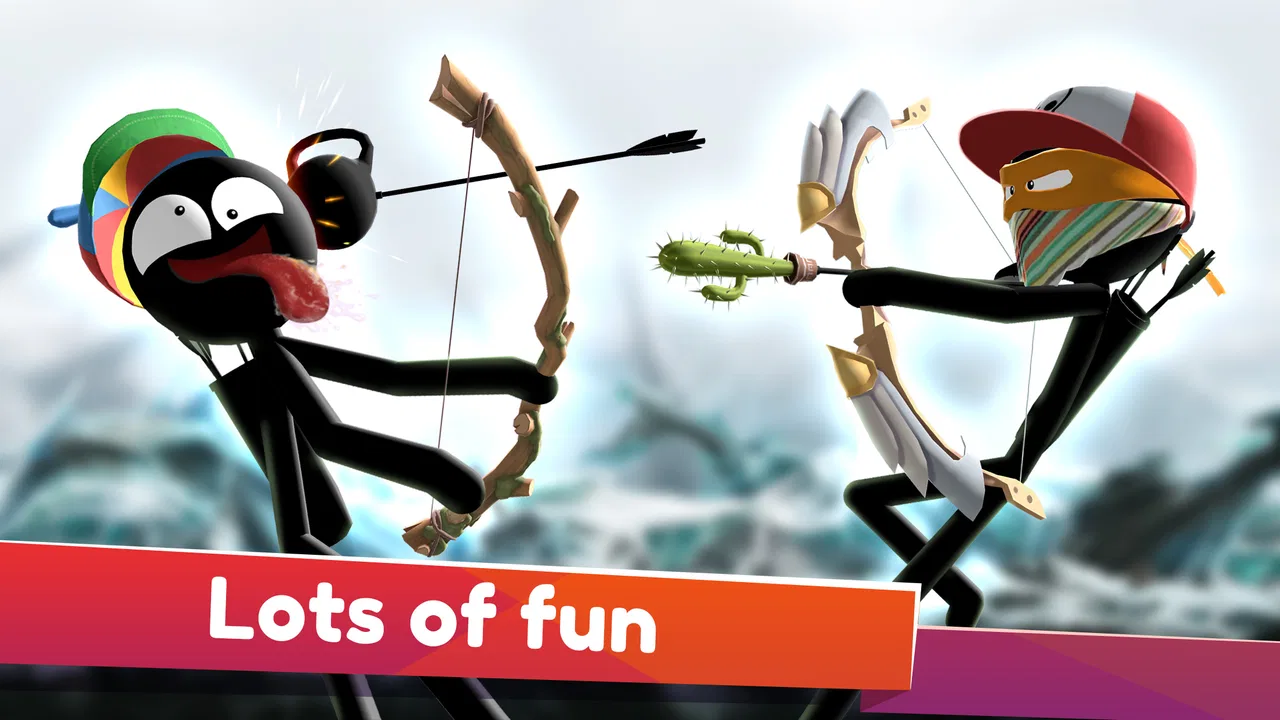
The art direction has a clear job: make the bow, the target, and the opposing player easy to read while maintaining a light fantasy atmosphere. I found that this kind of presentation suits the concept better than an overly realistic military style would. The game wants the focus to stay on the contest, so the visual world acts as a frame around the shot rather than competing with it.
That restraint helps the setting feel coherent. A bow duel needs a readable space, and the visual design supports the idea that the arena is a stage for two combatants. The mood is more playful and game-like than grim, which makes repeated matches easier to approach. I do not feel that I am entering a heavy dramatic campaign; I am stepping into a compact contest with a clear visual language.
The strongest artistic choice is the relationship between stillness and action. Much of the tension comes before the arrow moves. When the screen is visually understandable, a pause while aiming does not feel empty. It becomes part of the atmosphere. The opponent’s presence, the weapon, and the open space around the shot create a quiet moment that is immediately broken by the release.
This also explains why the game may not satisfy players who want a constantly changing spectacle. Its visual mood depends on repetition. The same basic idea remains attractive because the competitive situation changes, not because the game continually transforms its world. If you prefer elaborate environments, cinematic effects, or a large collection of locations to explore, a more expansive action title will probably offer more variety.
Reading the screen instead of chasing decoration
When I play, I try not to judge the visuals only by detail. For this game, the more important question is whether the presentation helps me understand the duel. A beautiful background would be a poor choice if it distracted from aiming. The restrained approach works because it keeps the visual hierarchy sensible: the combatant, the bow, the arrow, and the result of the shot matter more than decorative scenery.
That creates a useful trade-off. The game can establish a recognizable mood without asking the player to study a complicated environment, but it may feel visually modest beside larger action productions. I see that as a deliberate fit for its format rather than a flaw by itself. The art succeeds when I want clarity and a focused contest; it feels limited when I want the setting to become a character of its own.
A good way to enjoy this style is to let the presentation support your concentration. I get more from the game when I stop expecting a broad fantasy adventure and instead appreciate the small visual changes that make one duel feel different from the next. The world is not there to be collected or explored in the usual sense. It is there to make the act of aiming feel like an event.
Sound and rhythm turn each shot into a small event
The audio design works best when it reinforces the rhythm of preparation, release, and consequence. Archery naturally creates a sequence with a beginning and an end: I settle on a shot, commit to it, and immediately learn whether the decision worked. Sound gives that sequence weight. Even without a long musical build-up, the timing around the shot can make a simple action feel satisfying.
I found the overall mood more effective when I played with patience. Rushing through every action reduces the contrast between quiet preparation and sudden movement. Waiting a moment, adjusting my aim, and then firing gives the duel a more deliberate rhythm. This is one of the less obvious lessons of the game: the atmosphere is not only created by the art or audio; it also comes from the pace I choose within the available interaction.
That rhythm separates the game from many mobile action alternatives. In a fast arena game, movement and attacks may arrive continuously, leaving little time to breathe. Here, the pause before a shot can be the most important part of the round. It gives the contest a calm surface while keeping the player mentally active underneath. I enjoy that contrast, although someone who wants nonstop action may find the waiting less exciting than immediate combat.
Sound also helps feedback feel personal. A successful shot should not seem like an abstract number changing somewhere in the interface. The release and impact need to communicate that my decision had a result. This is why I pay attention to audio when deciding whether to keep playing: if the sound supports the action, repetition feels purposeful; if it becomes tiring, the compact structure can start to feel mechanical.
How pacing affects everyday use
In an ordinary situation, such as playing after work when I have only a few minutes, the pacing is a major advantage. I can focus on a small number of duels instead of committing to a long session. The game gives me a contained competitive activity, and the bow theme makes it feel different from another round of a generic shooter. The experience is especially useful when I want concentration without the mental load of managing a large team or a complicated map.
There is a downside to that same design. Because the experience is centered on repeated PvP encounters, a losing streak can make the rhythm feel less rewarding. A solo archery game would give me more control over the pace and difficulty, while a team-based title might spread responsibility across several players. Archers Online: PvP places the result more directly on the individual duel, so frustration can arrive quickly if I am not in the mood for competitive pressure.
I also recommend taking short breaks rather than forcing a long session after a poor result. The game’s compact structure makes this easy, and stepping away helps preserve the feeling that each duel is a fresh decision. That is a practical advantage over games designed around lengthy matches, where leaving early can feel wasteful.
Where the mechanics fit—and where they ask for patience
The central mechanic fits the theme well because aiming a bow is immediately understandable but not automatically easy. The game’s interest comes from turning a basic gesture into a contest of judgment. I need to consider the shot instead of treating every attack as an interchangeable button press. That gives the action more personality than a simple tap-to-attack system.
Online PvP adds the most important layer. A target does not behave like a passive practice object, so success depends on more than learning a fixed sequence. This makes the game replayable in a way that a conventional target range may not be. At the same time, it means the experience can be less relaxing. The opponent introduces unpredictability, and a player who only wants casual practice may prefer a solo alternative.
The best way I found to improve was to separate mechanical mistakes from emotional reactions. If a shot fails, I ask whether I released too quickly, aimed without enough care, or misread the moment. That approach is more useful than simply firing again in frustration. It also reveals whether the game suits me: I enjoy it when the process of correcting small errors feels rewarding, but I lose interest when I want immediate, effortless success.
The free entry point makes it easy to test that fit. I can try the core experience before deciding whether it deserves regular space on my phone. However, the game includes in-app purchases ranging from $0.99 to $99.99 per item, so I would advise setting a personal spending limit before browsing any optional purchases. The free price is a benefit for experimentation, but it does not mean every player will have the same relationship with the wider progression or purchase structure.
I would not spend money simply because I had lost several matches. That is a poor reason to buy anything in a competitive game. First, I would make sure I genuinely enjoy the aiming and duel rhythm. If the basic interaction is not satisfying, purchases will not fix that. If I do enjoy it, I would still treat optional spending as a convenience or personal choice rather than as a requirement for understanding the game.
Who should install it and who should skip it
I think it is a strong choice for someone who likes short online contests, simple controls with room for improvement, and a fantasy presentation that keeps the action readable. It is also a good change of pace for players tired of shooters, card battles, or team games but who still want a competitive mobile experience. The one-on-one nature makes the outcome easy to understand: my decisions matter directly.
I would skip it if my priority is a rich single-player campaign, deep exploration, or a large collection of unrelated activities. I would also hesitate to recommend it to someone who dislikes repeating the same core action. The bow duel is the point of the game, not merely one feature among many. Players who need constant novelty may find the focused design too narrow.
It is worth remembering the device requirement as well. The game supports Android starting with version 7.0, making it available to many older Android devices. That broad compatibility is useful, but actual comfort will still depend on the phone’s screen, responsiveness, and how naturally the aiming interaction feels in the hand. A game built around precision benefits from a device that responds consistently, so I would test the controls rather than assuming that compatibility guarantees an ideal experience.
The current version is 26.0812.6616, which is the version I would look for when checking whether my installation is current. Keeping the app updated is sensible for an online game, especially when the main appeal depends on connecting with other players. I would also check the age rating and purchase settings before handing the device to a younger player, even though the content rating is Everyone 10+.
My atmosphere verdict after returning to the arena
What stays with me is the game’s coherent mood. The art frames the duel clearly, the audio gives the release and impact a sense of occasion, and the pacing creates tension through pauses rather than constant noise. None of those elements overwhelms the mechanics. Instead, they make the basic act of aiming feel more deliberate. That balance is the reason the game works better than its simple premise might suggest.
Its limitations are equally clear. The world is a backdrop rather than a destination, the repeated duel structure will not suit everyone, and competitive losses can make short sessions feel sharper than expected. The purchase range also means I would approach the free download with awareness rather than assuming that every aspect of the experience is equally pressure-free. Those are not reasons to dismiss it, but they are important when deciding what kind of player you are.
Byril has made an action game that understands the value of focus. Instead of trying to imitate every popular mobile format, it builds its identity around bow-versus-bow tension and lets the presentation support that idea. I recommend it to friends who want a compact PvP game with a distinctive archery mood, especially if they enjoy improving through repeated attempts. I would recommend a different title to anyone seeking story, exploration, or uninterrupted action.
For me, the best use case is a short break when I want something more engaging than a passive time-killer but less demanding than a long team match. I can enter, concentrate on a few shots, and leave with a clear sense of what I did well or poorly. The real appeal is not the promise of endless content; it is the satisfaction of making one good decision under pressure. If that sounds enjoyable, Archers Online: PvP is worth trying for free and judging by the feel of its duels rather than by its simple premise alone.
FAQs for Archers Online: PvP
01What is Archers Online: PvP?
Archers Online: PvP is a competitive multiplayer archery game focused on real-time player-versus-player battles. You control an archer, aim manually, adjust for distance and wind, and try to defeat an opponent before they defeat you. Matches are generally short and skill-based, making the game suitable for quick sessions while still rewarding practice, accurate timing, and a good understanding of projectile physics.
02How does the gameplay and aiming system work?
The main challenge in Archers Online: PvP is landing accurate shots rather than simply tapping an attack button. Players usually need to control the angle and strength of each arrow while accounting for distance and environmental conditions such as wind. The controls are easy to understand, but consistent accuracy takes practice. Learning from missed shots is an important part of improving your performance in online matches.
03Can I play Archers Online: PvP with real players?
Yes, the game is designed around online player-versus-player competition. You can challenge other users in real-time matches and test your aiming skills against opponents with different levels of experience. Because the game depends on an internet connection, performance may be affected by network quality, server availability, or matchmaking times. A stable connection is recommended for smoother battles and fewer interruptions.
04Is Archers Online: PvP free to download and play?
Archers Online: PvP can generally be downloaded without an upfront purchase, allowing players to try the core gameplay at no initial cost. However, free-to-play games may include optional in-app purchases, advertisements, or progression systems that can affect how quickly you unlock certain content. Before downloading, it is worth checking the store listing for current pricing details, available purchases, and any age or account restrictions.
05Does Archers Online: PvP require a powerful phone or tablet?
The game is intended for mobile devices and should work on many modern Android and iOS phones or tablets, but the exact experience depends on your device model and operating-system version. Older hardware may show longer loading times, reduced visual quality, or occasional performance issues. Make sure your device has enough free storage, install the latest available update, and use a reliable internet connection for online play.
Pros
- Quick real-time PvP matches with simple
- easy-to-learn controls.
- Aiming physics make every shot feel skill-based and rewarding.
- Short battles suit mobile play during brief breaks.
- Competitive ranking gives experienced players a reason to keep improving.
- Distinct visual style and responsive animations make matches enjoyable.
Cons
- Matchmaking can feel uneven when facing more experienced archers.
- Progress may become grindy without frequent upgrades or rewards.
- Online play requires a stable connection to avoid missed shots.
- Limited battle variety can make sessions feel repetitive over time.
- Competitive play may encourage spending to progress more quickly.

Archers Online: PvP
Gallery